
On 2 November 2026, the Home Secretary set out the Government’s earned settlement policy in the House of Commons. For refugees who did not arrive through a safe and legal route, the standard route to settlement will be 20 years, and it will be 30 years if they entered the country by small boat or another clandestine route. Refugees who work or study can bring that down to 10 years. Time already spent with refugee status will count towards settlement.
For people who claimed asylum before 2 March 2026, this is a reversal. In March, the Government had said this group would keep the five-year route to settlement, and many people made their plans on that basis. The Government’s consultation response now says that those who claimed before that date and did not arrive on a safe and legal route will move to Core Protection.
There is a chance to change this
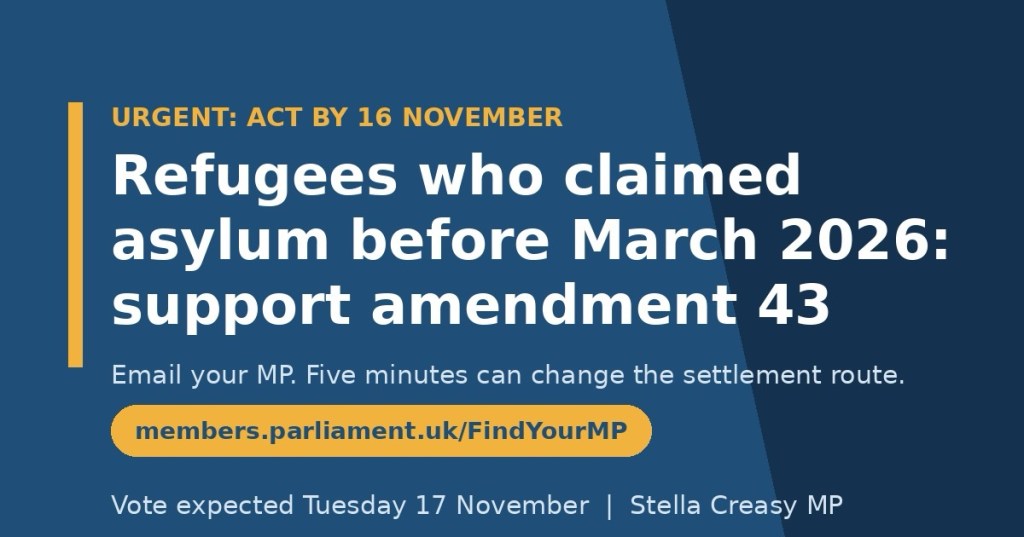
Stella Creasy MP has tabled amendment 43 to the Immigration and Asylum Bill. If it passes, it would require the Government’s regulations to ensure that anyone with protection status who made a claim on or before 1 March 2026 can apply for indefinite leave to remain no later than five years after being granted status.
The amendment does not decide the outcome on its own. It is a proposal that MPs must vote for, and it only becomes part of the law if it passes. That is why MPs need to hear from constituents now.
Key dates
- Monday 16 November: send your email to your MP.
- Tuesday 17 November: report stage of the Bill, when MPs may vote on the amendment.
The 17 November date comes from a newsletter, and we are still checking it against Parliament’s official schedule.
What to do: five minutes
- Find your MP. Go to members.parliament.uk/FindYourMP and enter your postcode. Open your MP’s page and copy the email address from the Contact section.
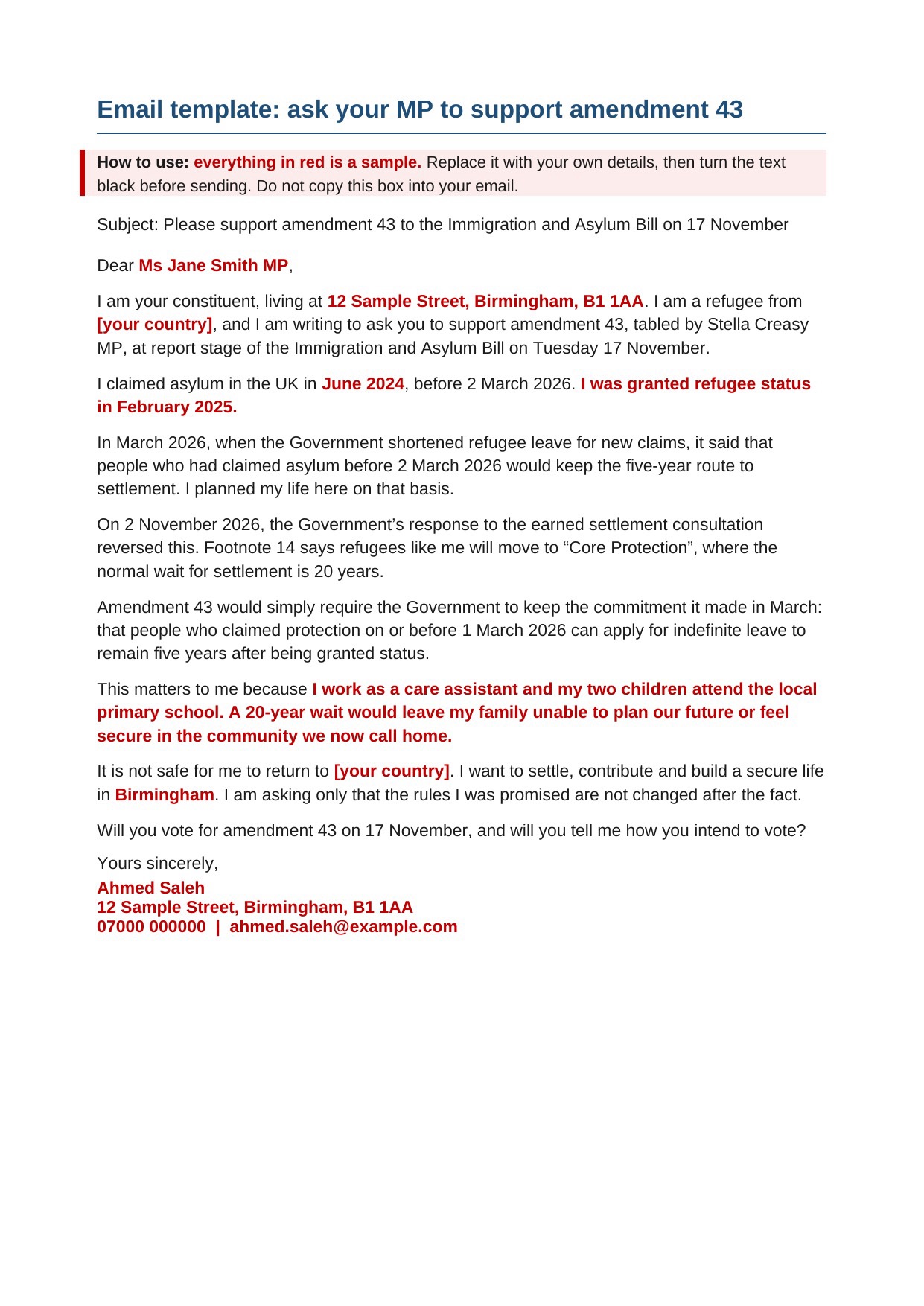
- Use the template. Copy the sample email and replace everything in red with your details: your MP’s name, your address and postcode, your country, the date you claimed asylum, and the date you were granted status. If your claim is still pending, write: “My claim is still awaiting a decision.”
- Add your story. Write one or two sentences about your life here, such as your work, your studies, your children, or what a long wait would mean for your family.
- Send it from your own email. A personal email carries more weight than a form message.
If you prefer not to find your MP’s email yourself, writetothem.com will find your MP from your postcode and send your message for you.
Important tips
- Include your full address and postcode. MPs usually respond only to people in their own constituency.
- You do not need to be a British citizen or able to vote. Your MP represents everyone living in the constituency.
- Do not include your Home Office reference number. Avoid any detail that could put family members in your home country at risk.
- Be polite and brief. Ask your MP how they will vote on amendment 43.
Share this with others
If you know someone who claimed asylum before March 2026, please share this post with them. Anyone living in the UK can write to their MP, including supporters who are not refugees.
This post provides general information, not legal advice. For advice about your own situation, speak to a regulated immigration adviser.


Leave a Reply